Monday, November 9, 2015

June 2015 - Mentors & Protégés

 
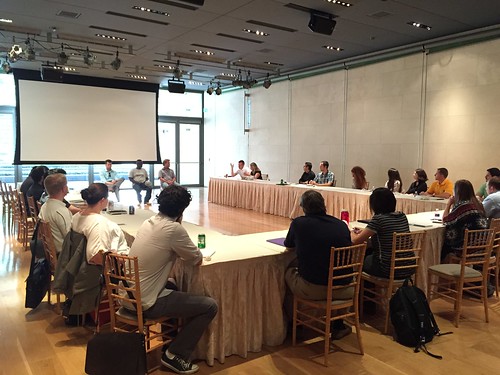
The June session of the 2015 AIA Emerging Leaders Program was held at the Steelcase Worklife Center in the Design District of Dallas.

For our panel discussion we invited three distinguished professionals to engage in a lively discussion and respond to questions concerning the topic of mentorship: Tip Housewright, FAIA, President of OMNIPLAN; Jim Henry, AIA, a Design Director and AVP of HDR; and Robert Rogers, P.E.,  a Structural Engineering Project Manager at Thornton Tomasetti. Tip has served as President of the AIA Dallas and the Dallas Center for Architecture as well as serving on numerous committees of the Texas Society of Architects. Jim has served on the AIA Dallas Board and Design Awards Committee and was awarded a 2015 Young Architects Award by the AIA. Robert is active as a leader with both Toastmasters International and the ACE Mentor DFW Program and has delivered keynote addresses on the topics of leadership and career success for both organizations. 

We started the panel discussion by asking each guest to describe their experience with mentorship and how it is conducted within their organizations. Tip explained that his experience has been informal, but always deliberate. While OMNIPLAN does not have a formal mentorship program that pairs mentors with protégés, Tip encourages his staff to serve as mentors and to seek mentors. Jim related that his experience has also been more organic than formal. He went on to explain that while mentorship occurs casually at HDR, as it does everywhere, the firm also has a formal program that pairs people across the organization, often in different offices. Robert related his experience engaging in Toastmasters International and then in the ACE Mentor DFW program. The ACE Mentor program provides an opportunity for professionals in the architecture, construction and engineering fields to educate and serve as mentors to high school students interested in pursuing a career in these fields. Throughout the discussion, all three guests stressed the importance of treating a mentorship experience with respect as a relationship, that it can change lives for the better. It can lead to professional and personal development. It's a two-way street. Both participants need to be committed and sincere. They need to be honest and empathetic, make expectations clear, get to know each other, be accountable, and sometimes make sacrifices in their use of time. It takes effort to make the most of the experience. While it can be difficult to engage in a mentoring relationship outside of your firm or field of practice, all three guests agreed that those can be very rewarding as well. Tip noted that clients can be great mentors. Involvement in the AIA and other business and community organizations can lead to significant mentorship opportunities.

 After the engaging panel discussion, Pete led the class through additional discussion on mentorship and professional development. Pete also characterized mentorship as a significant relationship, the goal of which is to advance the development of competence (expertise) and consciousness (self and situational awareness), to create "fully developed professionals". Mentors help protégés understand themselves. Pete then went on to explain two models of career advancement: position vs. responsibility. They are not necessarily the same. People seek and attain each at different rates and with differing motivations. Pete finished class by describing 16 "Crashes and Burns", consistent behaviors that can severely inhibit development. 

After a brief discussion of the class project we made our way over to nearby Rodeo Goat Ice House to partake of tasty beverages and good conversation.

Wednesday, October 14, 2015

August 2015 - Leadership Charrette with ELP Alumni


The August session of the AIA Emerging Leaders Program was hosted at the Dallas Center for Architecture on August 14th.

This month’s class discussion, led by Pete, centered on conflict and conflict management.  Many times conflicts arise out of conscious or unconscious beliefs about the competition.  When parties clearly communicate and learn to ask the right questions, conflicts can be avoided or resolved diplomatically.  The class participated in a role playing activity where individuals were only provided portions of the story; inducing conflict.  An additional dynamic was added to the activity when each group needed to come to an internal resolution, then negotiate with an “outsider.”  Understanding one’s personal communication style, learning to ask the right questions and not rushing to assumptions helped to reduce these conflicts.

The second part of the class welcomed back previous years alumni for mixed group discussions.  This was a great opportunity to gain insight on their experience since the class and how the class has helped to shape their careers and work experiences.  Several topics were posed by Pete which prompted discussions on conflict, self-reflection and career goals.  Many shared how the class provided them skills to understand their co-workers, their own leadership style and helped them ask questions about themselves and where they wanted to be in the future.  Thank you to all who attended.

Saturday, October 10, 2015

October 2015 - Cultural/Sustainable, The Citizen Architect


The October Emerging Leaders class, which was our last class of the year, was held at the Latino Cultural Center, just east of downtown Dallas.  We began with a brief introduction about the LCC, including their mission to serve as a catalyst for the preservation, development, and promotion of Latino and Hispanic arts and culture, and information about upcoming events.

We then had our final "check-in" as a class, which was our most spirited check-in of the year.  Pete noted how different this was from our first check-in back in February, which resulted from the bonds that have formed.  We then transitioned into a brief review of the lessons we had learned throughout the year, and filled out a diagrammatic cheat sheet that helped to illustrate the main topics that have been covered. 

After a short break, we discussed what we value in life, with the help of Pete's balance beam hypothetical.  We then engaged in a class-led study regarding life balance.  Everyone in the class filled out their own "Wheel of Life", which provided an introspective view of what areas in our life we are most fulfilled in, what areas in our life need work, and what we value the most.  We also discussed ways to feel more fulfilled in certain aspects of life, especially when the time balance seems to be slanted heavily towards our careers.

Finally, we ended the session with a "check-out" discussion regarding what each individual gained from the Emerging Leaders class throughout the year.  While we are all sad that the year has come to an end, we are grateful for the friendships that have formed with our classmates, the help and guidance from the ELP co-chairs, and the wisdom and inspiration that Pete has provided through the entire journey.  We look forward to getting together again for our ELP graduation on November 10th.

Tuesday, October 6, 2015

September 2015 - Community Activism


Photo Credit:  Andy Moon, 2015 ELP Co-Chair


Our September session for 2015 AIA Emerging Leaders Program was held at The Nasher Sculpture Center in downtown Dallas.
 
Before our scheduled panelists began, Diego Barrera, AIA gave us a quick overview of the ACE Mentor Program and how we could get involved as mentors. The mission of the program is to enlighten high school students to pursue careers in architecture, engineering and construction.
 
After Mr. Barrera’s presentation, we began to discuss September's topic, Community Activism, and we had two great community forces on hand for discussion. Our distinguished panelists were Patrick Kennedy, CNU AICP, urban planner and partner at Space Between Design Studio and prominent founder of the Coalition for a New Dallas, a political action committee, and Daron Babcock, founder of Bonton Farms, where the collective efforts of the last two ELP classes have been focused on designing the infrastructure of the working urban farm in South Dallas. Not only did we have these two inspirational leaders right in front of us, Daron brought Patrick Wright, a fellow resident of the Bonton Community.  All three gentlemen inspired us by describing how their forces for change within the community began, and how the grassroots nature of their efforts eventually won over widespread support for their initiatives.
 
Mr. Kennedy's efforts focused on his work with the Coalition for A New Dallas, a local PAC whose charge is to better inform community leaders and members of the prospects of implementing sound transportation and urban design principles in a broader regional framework.  Chiefly, the group's mission was to redirect TxDOT's efforts towards the rebuilding of the I-345 elevated viaduct that bifurcates Downtown Dallas and the Deep Ellum/East Dallas area towards a more sustainable and progressive model that replaces the aging viaduct with an at-grade boulevard and opens up land for development between Downtown and Deep Ellum, as well as, more importantly, removing the psychological barrier that the elevated freeway present to groups vying to bridge the disparate areas into a more cohesive Dallas.  Currently, the PAC's initiative is to engage political and civic leaders in moving the alternative vision for I-345 forward.
 
Mr. Babcock and Mr. Wright offered up their stories behind Bonton Farms in South Dallas, and how their lives were transformed from ones with [admittedly] little meaning to ones championing the great cause of offering up solutions for the "food desert" problems that plague low-income neighborhoods like Bonton, and addressing the broader problems of reducing crime, recidivism and drugs that plague these areas and refocusing on these with efforts that encourage and reward hard work and instilling community pride and cohesion and a path out of hopelessness.

Beyond sharing their stories, a fruitful discussion was had after their initial introduction.  Much appreciation goes out to these gentlemen for sharing some of their time and wisdom with us.


Tuesday, September 22, 2015

April 2015 - Architectural Leadership


Our April session for 2015 AIA Emerging Leaders Program was held at The Trinity Trust offices in the Design District on the 17th of the month. 

Once the panel discussions started, there were discussions ranging from personal leadership style to fashion accessories to the future of Dallas.  Our distinguished panelists, Linda McMahon with TREC, Bob Meckfessel with DSGN, and Rick del Monte with Beck shared their viewpoints, anecdotes, wit and wisdom in a series of pre-arranged and spontaneous questions.  (Thanks again Linda, Bob & Rick – We really enjoyed all of your insights!)


 After a quick break, the next portion of our session hosted by Pete dealt with discussions on the Adaptor-Innovator spectrum.  Assessments were taken and copious amounts of simple addition rendered us into three score groupings.  Soon after we found ourselves under Pete’s conductor-like control; arranged and re-arranged based on our scores in the main lobby space of The Trinity Trust.  It was an interesting change of pace to work in some movement into the session since the panelist discussions had been so intense and cerebral.  
 
 
Nearing the end of our time and feeling slightly dizzy from all of the arranging, we ended our session with a few well deserved beverages on the patio at Meddlesome Moth conveniently located a few blocks away.

Wednesday, April 15, 2015

March 2015 - Architectural Advocacy

After February’s session with Mr. Walt Humann reminded us of the role architects can play towards benefiting the community, March’s session was to show us the role architects can play towards the benefiting the profession as a whole.
                We met this month in the Design District at the ALA showroom and where joined by Michael Malone and Bob Borson for a spirited panel discussion. As current TxA President, Michael stressed the importance in the knowledge of the legislative workings in our State’s capital and how these directly impact the profession. And not just the architectural profession, he stressed the impact a current bill to diminish the interior-designer license could have on the license of architects. Michael showed us the direct connection to the capital’s discussions with the bill to preserve Texas’ historic state capitals and how that equals work for architectural offices. He also pointed out the role organizations, such as Texas Society of Architects and AIA Dallas, play in advocating for architects on the legislative level with organizing events such as Advocacy Day.
                As creator and primary contributor to the popular blog “Life of an Architect,” Bob stressed the importance in advocating architecture to the public. His underlying message was that the more informed the public is as to what architects do the more the role of architects are called upon. He encouraged us to each to start our own means of communicating our profession to the public.
                After the panel discussion and Q&A the class was joined by Pete DeLisle for another inspiring leadership counseling session. This month Pete covered the different levels of knowledge and experience we will encounter throughout our careers. This recognition of other’s (and ourselves’) level of capacity and understanding is a vital for communication will those that may be earlier in their career than yourself, or later in their career.
                We wrapped March’s session with the discussion on this year’s class project. In a nearly unanimous vote we decided to continue the Emerging Leaders Program’s history with the Bonton Farm-Works program. With the help of Habitat for Humanity this year’s class will help design and construct the caretakers’ unit so that the farm can have an on-sight caretaker, as well as space for education demonstration. It is going to be a quick and hectic schedule…should be fun.


-Ryan Thomason

Monday, March 2, 2015

2015 - The Architect and Community Leadership


After our day long workshop in January our class was excited to meet up again at Page, and check in with the class and kick off our discussions for our class community project. The ELP class welcomed our first guest speaker Mr. Walt Humann, a well-recognized individual in the DFW area not only for his business but also his public service efforts. As the 2015 class ramps up we will begin our selection for the class community project with which we will volunteer our time, talents, and knowledge in an effort to better the community where we live and work. Mr. Humann shared with us a case study of a highly successful endeavor he has been working on, the Jubilee Community Center, and he was able to share the triumphs and challenges faced as their team worked tirelessly to make this public service project a reality. He stressed to the class the importance of being involved in our communities and staying involved, something which I know inspired me personally and I felt like it strongly resonated with the class as well.


Going around the room, Walt took the time to ask each of us what our thoughts were on the future and what we felt were going to be challenges we would face in the future. As architects many, if not all, of us feel a social responsibility to improve the fabric of the built environment in which we live and work. We all enjoyed the opportunity to hear Walt’s experiences, and then also to have a brief Q&A session with him at the end to inquire about his thoughts, opinions on current issues in the DFW area.

After class we all met up at the Woolworth for happy hour where we could "let our hair down", share with each other some of our current experiences at work, and socialize about the class discussion in a more casual setting. Having the opportunity for open and honest peer discussions about class, work, and life are one of the things I am looking forward too most with our class.

Cheers!
-Kelly Knowlton

Friday, October 17, 2014

The 2014 Class Project: Bonton Urban Farm

Just ten minutes from our work place is one of the most underserved and isolated neighborhoods in Dallas.  Its infant mortality rate and crime rate are among the highest in the state. Bonton, with its physical isolation and concentration of poverty is literally dying from being undernourished. Malnutrition is virtually unavoidable as there is no grocery store or basic health services in the neighborhood.

The ELP Class of 2014 met with Bonton Farm-Works leadership starting in April to assist building sustainable food systems in this impoverished community.

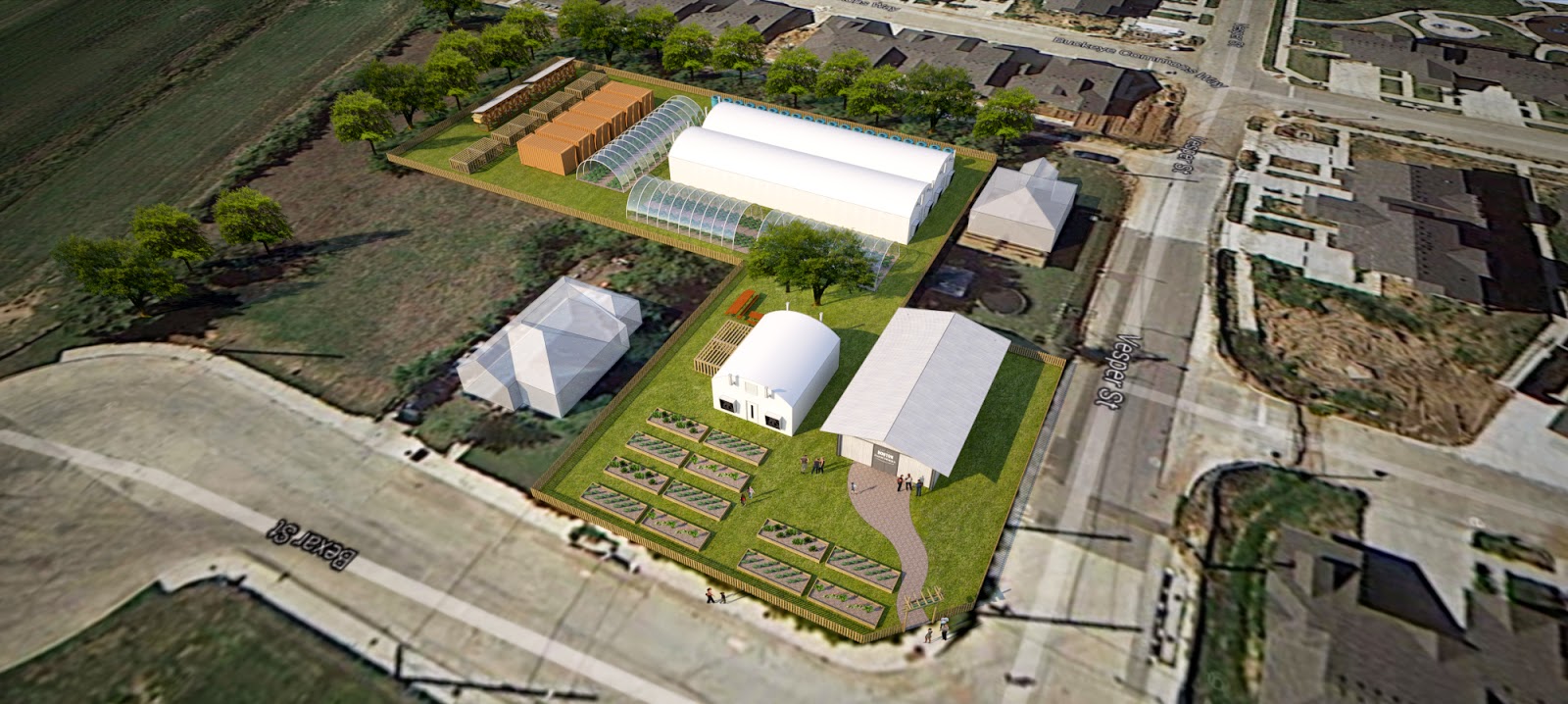
The mission of Bonton Farm-Works is to create a replicable model to foster food sustainability through access to healthy, local organic foods, and education. Various innovative urban gardening methods will be used to create a micro-farm where the local community can come to learn to build one and to have access to food that can be harvested there.

Partnered with Manhattan Construction and Kimley-Horn, the Class is designing the plan layout for Bonton Farms which includes greenhouses, a water collection system, animal husbandry facilities, and a training center/caretakers quarter. The Class has also put together a marketing brochure that will be used to raise money.

Seeing the Bonton Farm-Works in operation and learning about the community has been inspiring experience for the Class. Here’s how you can find more about the Works.
www.facebook.com/bontonfarms

Be a part of impacting change!


Cha-Hyung Hunt, FKP Architects

Wednesday, September 24, 2014

ELP September 2014 Class


This past week, the Emerging Leaders Program welcomed guest speaker John Crawford of Downtown Dallas Inc.  Our session met downtown, at the newly remodeled One Dallas Center [ODC] - headquarters building for HKS Architects.  This aging skyscraper, originally designed by I.M. Pei, was until recently nearly abandoned, and had fallen into disrepair  However, since the remodeling effort, ODC has become an impressive example of the revitalization of the Central Business District as downtown’s commercial and residential growth continues to explode.  Considering the surroundings of this month’s session, there was no more fitting speaker to present than John Crawford, one of the key individuals responsible for the resurgence of Downtown Dallas.
John is the president and CEO of Downtown Dallas Inc. [DDI], which is a non-profit firm championing the transformation of downtown Dallas into a vibrant, urban center.  During his tenure as the CEO of DDI, the downtown residential population has grown by over 50%.  This has been accompanied by corresponding increases in retail absorption, construction of new parks, and new multi-modal thoroughfares. 

John spoke with the ELP group at length about what it takes to become an influential leader within the community, and the characteristics he viewed as vital.  Most importantly, he stressed the necessity of building a network of relationships with every engagement or endeavor along the way.  He also emphasized the importance of selecting organizational involvement based first and foremost on personal interests and satisfaction.  He also gave an interesting perspective on volunteering ones ‘sweat equity’ and not merely one’s wallet. Immediately following his talk, a lively discussion ensued.  John entertained our questions about the future of Dallas’ growth, including his stance on several controversial topics such as the parking/transit situation for new Downtown developments, and the proposed tear-down of I-345.
After Mr. Crawford’s lecture, we filled ourselves with fried pies from Bakers Ribs, and were treated to another excellent leadership counseling session by Pete DeLisle. This month Pete covered: reactions and solutions to threat perception, and tips on how to flourish in high-pressure situations.  After the session the leaders and a few sponsors gathered for happy hour at The Library in the Woolworth.  If you have not been here yet – I strongly recommend you go…it’s how I imagine Ron Burgundy’s apartment from Anchorman to be: Leather-bound books and rich mahogany abound.  Needless to say it’s a great venue for a cocktail! 

Last week’s session was characteristic of the level of quality we have enjoyed at each of our monthly sessions.  Informative and engaging guest speakers paired with fantastic leadership insight from Pete has made ELP a highly successful platform for crafting the future leadership of our profession.  As this year’s ELP class begins to wind I would like to extend thanks from all of 2014’s class to AIA Dallas, as well as the sponsorship from our respective firms that have allowed us to participate.

-Paul Ferrer | HKS Inc


Friday, September 19, 2014

Class of 2013 - Promise House - Construction Update

Ten months ago the 2013 class held its final class session and graduation ceremony. At that point, we had raised over ten thousand dollars, and were still diligently working to finish construction documents for the new shelter space at Promise House. Through hard work, dedication, and help from some great partners in the industry (Beck and Balfour Beatty), the end is in sight!
 
September 8, 2014 marked a major milestone stone for Promise House, as interior construction officially began on the build out of additional shelter space for their teen center.
 
In just 5 short days, the 1,600 sf space had stud walls in place, and electrical work started. Day 9, electrical and plumbing was moving ahead full speed. Inspections for framing are next on the list, and should happen next week. This means drywall can start being installed next.
 
All duct work, air handlers, furnaces, and heat pumps are all in place - I hear the AC will be turned on today if all goes well! Plumbing is in and tied to the risers, and sprinkler heads are being relocated as this is written.
 
Next week, we should have rooms that actually start to look like rooms - equipped with drywall and lighting! After that, the space should be on the home stretch. Add some finishes, a little paint, furniture, and Promise House will have the additional space they need to house more teens.
 
The shelter will house 10 new beds for teens between the ages of 18-22, who have had a hard time getting on their feet and need a little help, support, and guidance in order to lead successful lives. If you would like to contribute to a great cause, please visit http://promisehouse.org/how-to-help/ 
 
Please check back for updated pictures of the space.


contributed by Shannon Carpenter, AIA
Thanks to Lee Ellis at Promise House for providing pictures and updates

Monday, August 4, 2014

Class of 2013-2014 Project Update


It was about 6 months ago when we said the group was close to having construction documents complete. At that time, our goal was to have the newly built shelter space completed by the end of summer. Well, it's still summer and we are so very close to our goal. We might be a couple months off from that original goal, but we sure are close to providing the much needed additional shelter space for Promise House.

As of right now, this is where we stand:
1. We have a signed and sealed drawing set - which is in the process of getting permitted
2. The project is FULLY funded. Thank you to the 2013 Emerging Leaders Class, Promise House and their donors, Community Beer Company, and all the wonderful in-kind donations/labor we have received.
3. Thank you to Balfour Beatty for joining as our General Contractor, and for lining up sub contractors, materials, and much more.
4. Construction is READY to start..... soon!

The end is in sight! Special thanks to the following people for going the extra mile to make this project a reality.
- Lee Ellis and the Promise House Crew
- Rick Walker and Beck
- Katie Humphries and Balfour Beatty

We cannot wait to complete this project and share images of the final product! More importantly, we are excited to help Promise House expand their facilities in order to have continued success helping local children in need.


Sunday, July 20, 2014

ELP June 2014 Class


Some days after our June ELP class I was driving across the DFW to a client meeting and was listening to Think on KERA. That episode was titled “Failing Up” and was a discussion with Ryan Holiday on his new book "The Obstacle is the Way: The Timeless Art of Turning Trials into Triumphs." The discussion covered failure, growth, and resilience through the lens of one’s life.

Numerous class discussion have focused on the positives of failure and how failure can foster leadership within a person. However, if our conversations have focused on the micro (two steps forward one step back), the conversation on with Holiday revolved around the macro. Success and leadership are not the result of a single event or reaction to an event. One who is branded a hero or leader resulting from a courageous action or an event developed the traits required to succeed and lead over their lifetime. Hesitation or action is not a result of the situation but the person.

The events which lead to the creation of a leader are not fate but choice. The person who hesitated failed to react because of years of decisions which did not prepare them for action. And though not much at the beginning, years and decades of planning for failure gave the person who acted a lifelong catalog of possibilities through which he/she is able to sort and splice for decisions and actions. During several classes, Pete has mentioned that when a systemic failure occurs the one ultimately responsible is the one who should have foreseen the failure. A successful leader will be constantly preparing for failure and constantly preparing to respond.

Let us all learn to fail with style.


Thursday, May 22, 2014

ELP MAY 2014 CLASS


I gave myself a trip to Seattle as a graduation gift in year 2007. The weather was gloomy and temperature was cold; just the way I liked.

On one fantastically gloomy day, I met my Seattleite friend, Alex, for coffee. Alex was in his late 20s, and he was an expert coder working at one of the most recognizable software companies in the U.S.

I remember meeting him at Starbucks on Pike Street. He was hunched over his screen, like Gollum staring at his precious ring. His nose was almost touching the screen.

I looked over his shoulder to see what was so interesting. It looked like very small, black ants all over his screen. There were well over a hundred lines of code, in a tiny, tiny font; all made to fit the small 15” screen.

I told him “You geeky coder guys should at least style up with a larger screen.” Alex smiled with pride. “Yeah, I know”. He was pretty proud of being able to work on such a small screen with such a large amount of data.

He later told me that this laptop with the tiny, 15” screen was actually his work laptop.  He was using it on a Saturday because he had traded his personal 22” screen with his work laptop. There were a lot of people at work whose seniority put them ahead of him to receive a wider screen. It would have taken months for him to get one of the new ones and he just couldn’t accept it. So he brought his personal monitor to work. As he walked down the corridor at work, carrying a 22”, he felt like he had to keep explaining that it was from home. He didn’t want anyone to think he had cheated his way up to the 22”.

He didn’t go by the rules. He made up his own rules. Nobody got hurt and he created a better work environment for himself and it helped him do better work.

“Be your own anthropologist, seek out radical thinkers, challenge your belief, and develop your perspective” were notes from the May guest speaker, Rich Farris.

Creativity requires working outside your comfort zone in order to find new ideas. If you choose only the familiar ones, you are working completely within the realm of the known, which means you are more likely to simply repeat old ideas.

Creativity is part of our job as an architect; whether we are “adaptors”, “bridgers”, or “innovators”. Innovators generating new ideas, adaptors incorporating new data into existing structures to make them more efficient, and bridgers, playing a range of roles.

As leaders, we need just a little more courage to break, and remake, the small rules that govern our technical lives. 

Be radical.


by Cha-Hyung Hunt, FKP Architects

Monday, January 20, 2014

ELP Class of 2014
Chairs: Amy Holzle, Lauren Boepple, Jared Eder, Shannon Carpenter

This year's Emerging Leaders Class met for the first time Friday evening at the DCFA for a small orientation and introduction to the program. This would be the first time they would meet the one and only Dr. Pete DeLisle  "The Man". The man who would take them on a journey for the next 9 months, teaching them how to use their voice, have a voice, and be a leader.  I would imagine after the ELP class left orientation, they had questions, and thoughts of what the heck they would be doing the next morning. Would they be gathering early the next morning for the Kick-Off Retreat, only to encounter 6 hours of lecturing and note taking? Would it be like college classes, sitting and listening for hours upon hours? Little did they know, they were in for a treat! A day of learning, filled with activities and discussions most of them had never had the privilege of experiencing. Because, let's face it, not often do learning and fun end up in the same sentence.

The class arrived at the Pump House bright and early on a Saturday morning, expecting breakfast and hot coffee to help wake them up and focus on a day of learning. Surprise, in typical architect fashion… the coffee and food was running a bit late. Fast forward 4.3 minutes and the coffee and hot breakfast burritos arrived. As the group stuffed their faces, they went around the room sharing interesting facts about themselves. Some were about dogs, babies, babies on the way, how they needed more sleep, how beautiful it was outside, how excited they were to be sharing their Saturday with a group of strangers etc.
For most of these individuals, it was the second time they had been in a room with these people, one would still call them strangers. Try and imagine yourself in their shoes and hold on to that feeling of uneasiness. Now imagine you are given your first task, the goal is to convey a sentence  you just wrote down to the person beside you. There's only one problem, you are not allowed to speak to the person beside you. Now add another variable, the person you are trying to communicate with cannot see you. You can’t speak, and they can’t see. How do you communicate effectively? How does this relate to work? How does this relate to relationships? Why does this matter? My personal favorite sentence one classmate wrote "This exercise makes me uncomfortable". Now imagine how the heck you are going to convey that message without speaking to your partner. Without giving it away, I'll let you view some images to see how our talented new class reacted. This was just one of the many lessons discussed on Saturday, January 18th, at the Emerging Leaders Class of 2014 Kick-off Retreat.


The day went on with discussions about oneself. What’s known, hidden, blind, and unknown. Each topic grandly defined with stories and situations that would help each class member understand what makes an effective leader, co-worker, and teammate. Each discussion led to a group activity, even something as simple as group juggling and hot potato, if you will. The tasks were, for the most part, straightforward, allowing each individual to observe their surroundings and uncover the reasons why people work together the way they do. It allowed them to understand how leadership develops naturally within a team.
Everything in life can be examined. Sometimes we tend to over think the simple answers and try to produce complicated judgments that only cause more worry and anxiety. Pete has a way of allowing the group to work together without distractions, by carefully controlling the internal and external circumstances, which in turn allows each person to take a step back and observe/study the resulting behaviors. Juggling those tennis balls and developing a communication style, led everyone to realize it’s much like juggling work. if you have an effective team, and team leader, everything will flow as it should. The team will be effective and the company will be effective and efficient.


Halfway through the day, the group gathered as a large family would, and had lunch. Lunch was catered by Street Fooder (one of our favorites). The group was treated to the PHAT sandwich, aka Pretty Hot And Tasty – Texas toast piled high with chicken and slaw. Yum! By lunchtime you could tell the group was comfortable with one another and was ready to open up. The room was filled with chatter, stories about family, work, the previous class discussion, and so on.
As is routine, lunch ended and the group gathered to continue the conversation. Situational conversations began amongst the group. Feedback was given, and ideas and stories pinged back and forth from one person to the next. You could see and feel the camaraderie within the room. The class learned there is no such thing as constructive criticism, as this is an oxymoron. Instead we should learn to call it constructive feedback, and learn how to promote positive remarks and useful feedback.  
As the day game to an end, the group discussed what they had learned that day and what they had hoped to gain from the class. By the time it was ready to depart for the day, it became to clear to all in the room, that the activities and discussions had served many purposes beyond leadership and leadership skills. The entire day had transformed the group of strangers into a group of partners, who were all beginning to trust one another and make friendships. It will definitely be an amazing adventure for this group over the next 9 months, with many great stories to come!


Article: Shannon Carpenter, AIA NCARB (2014 ELP Co-Chair)

Class of 2013 Project Update

Promise House _ Street Outreach Shelter Space


As of today, the team is VERY close to being able to send construction drawings to the city for permitting! This means we can start construction in the near future!!!!!
 
The group has a few meetings left with Promise House to hammer out some finish and construction details, then it’s off to securing supplies, as well as hands, to help get this project finished.
 
Our goal is to have kids in the space before the end of Summer.
 
We would like to thank everyone who donated money at our fundraisers, volunteered to review drawings, and those who have given in kind donations to help this project be a success! Keep checking back for the final build out photos and updates!


Friday, September 6, 2013

Tuesday, June 18, 2013

Innovators and Adapters, Mentors and Proteges


How easy or difficult do you find it to present yourself consistently, over a long period of time as:

 
a perform who conforms?


a person who proliferates ideas?


a person who needs the stimulation of frequent change?

 
These questions and others from the Kirton Adaption-Innovation Inventory were pondered by each member of the ELP class during our June meeting.  On a scale from “very easy” to “very hard”  we each reflected on whether or not we considered ourselves to be “methodical and systematic” or a person who “risks doing things differently.”   The responses to the questions had numerical values resulting in a score that indicated whether we were innovators (who generally produce numerous ideas, prefer less structured environments, and like to find new ways to do things), adapters (who prefer to generate a smaller number of high quality ideas, work within the established system, and like well defined restraints) and bridgers (who fall somewhere in between).  In short, a contrast was established between those who like “doing things differently” and those who like “doing things better” and those who strive to balance or link both together.

Once we all had a score, we arranged ourselves from high to low and reviewed the results.  Most seemed to feel that they did indeed fit into the stereotype of innovator, adapter, or bridger as described.  Perhaps not surprisingly, this group of architects and designers tended to skew towards the innovator side on average.  Pete then lead a discussion on the implications of these varying personality types, how those traits affect teams, and what this means for a team leader.

Also at our meeting, we had the pleasure of hearing from four panelists, Kimberly Byrum of Alvarez & Marsal Real Estate Advisory Serices, Laura Davis of HPD Architecture, Terrence Maiden of Corinth Properities, and Dennis Stacy of Stacy Architectural Studio, on the topic of mentors and proteges.  Several of our previous panelists had touched on the importance of this subject, but at this meeting, the four shared their advice and stories on an in depth level.  Having a mentor is important, they emphasized, but having a protege is also important.  Some shared how the act of being a mentor had been as meaningful an experience as being mentored, not only because a younger person can bring fresh ideas and perspective to the table, but also because there is a additional motivation to uphold high standards  of excellence as an example to the protege who is watching.  The discussion then turned towards current efforts in the field of architecture, both from firms and from the AIA, to foster mentorships among its members. 

Do you have a mentor? we asked each other.  How have our mentors helped us?  What do we wish a mentor would do for us?  How will we someday mentor those who will be at our experience level, looking up to us for help and guidance?


Gwen Morgan, SHW Group